01 / Hold
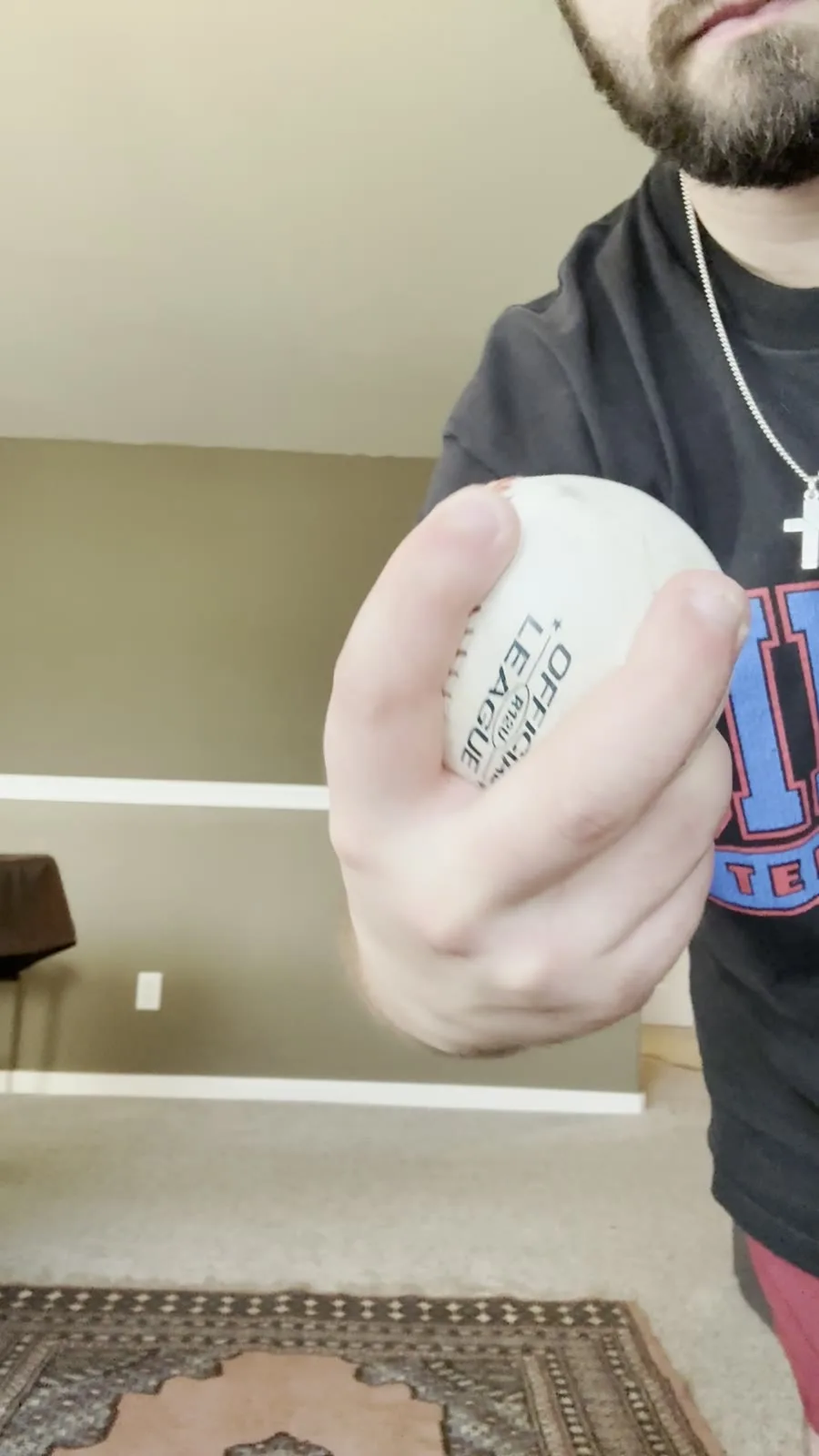
Start with the whole hand.
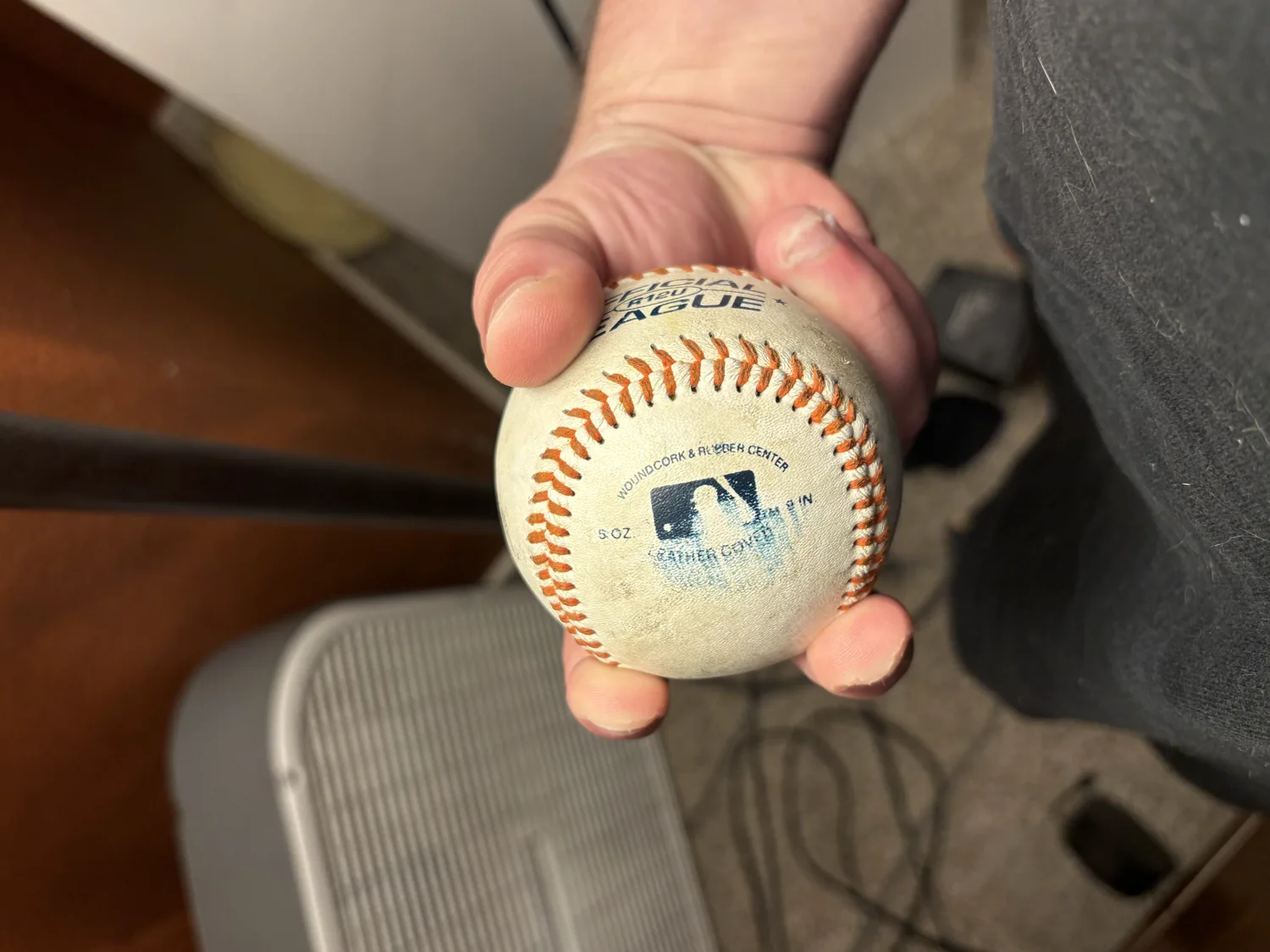
Index and middle fingers run along the pair of narrow seams that sit close together, rather than across the horseshoe. That orientation tilts the ball away from pure backspin and trades ride for arm-side run and sink.
Paraphrased from Driveline, not quoted.
The complete grip notes
- Set your index and middle fingers along the two narrow seams where they run close together, not across the horseshoe.
- Keep the same width and softness as your four-seam: a finger-width apart, held out in the hand.
- Rest your thumb underneath on the leather; some pitchers ride the side of the thumb against a seam.
- Throw it like a fastball. The grip makes the movement. You do not have to.
Same effort as the four-seam. Stay behind it and let the seams do the work.
Index and middle fingers run along the pair of narrow seams that sit close together, rather than across the horseshoe. That orientation tilts the ball away from pure backspin and trades ride for arm-side run and sink.
Paraphrased from Driveline, not quoted.
The standard Driveline two-seam grip lays the index and middle fingers on the two close seams, thumb underneath or slightly off-center, ring finger steadying the side. It is the baseline grip most arms reach for first.
Paraphrased. Driveline labels this the default two-seam family and the one most pitchers default to.
For a sinker specifically, the index finger often shifts slightly inward while keeping seam contact, biasing the release toward side-spin and diving action over balanced backspin-and-run.
Paraphrased.
The most extreme movers ride a single seam: a one-seam grip that orients the leather to bend the airflow itself, adding run and sink beyond what the spin alone would suggest. Most of the biggest seam-shifted-wake movers Driveline studied were throwing a one-seam sinker.
Paraphrased. The one-seam grip dominated Driveline's study of the largest axis-deviation pitchers.